
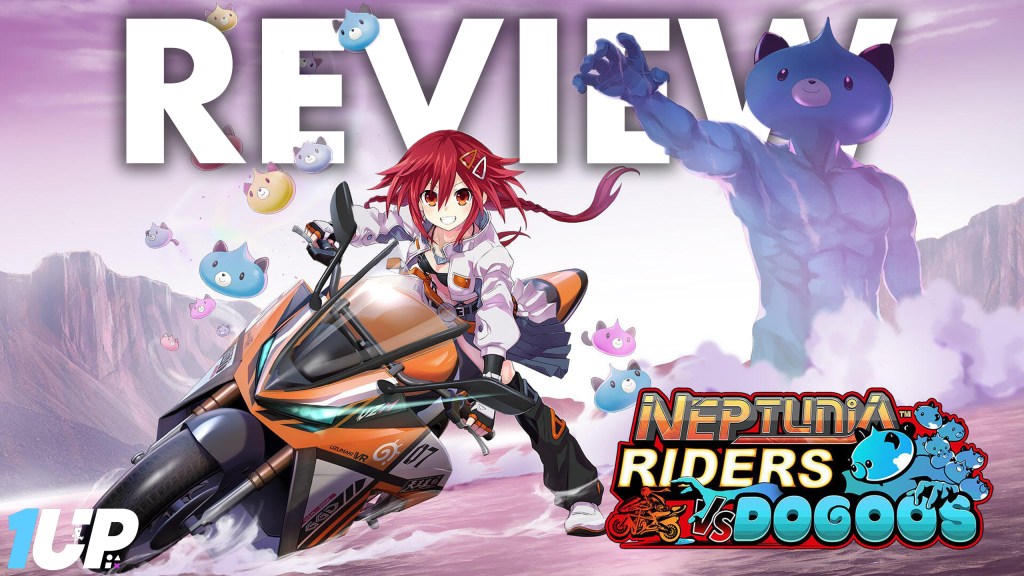
It takes a certain kind of player to appreciate the Neptunia franchise—a blend of self-aware humor, fourth-wall breaking antics, JRPG tropes turned inside out, and, of course, a hefty dose of fanservice. Since its debut in 2010, Hyperdimension Neptunia has carved out a niche that’s both mocked and celebrated, never pretending to be more serious than it is. But every so often, a spinoff emerges that dares to be stranger than the mainline games, and Neptunia Riders VS Dogoos fits that bill to a tee.
At first glance, it sounds like a joke: a biker gang of anime goddesses facing off against hordes of sentient slimes. But beneath the absurd premise lies a surprisingly robust and entertaining gameplay loop, blending arcade-style vehicular combat with beat-’em-up mechanics and a racing-style campaign progression. It’s fast. It’s chaotic. It’s dripping in pastel-colored madness. And somehow, it works.
Developed by Compile Heart in collaboration with Idea Factory and published globally with minimal delay, Riders VS Dogoos is another entry in the growing Neptunia multiverse that breaks genre conventions—this time veering off-road into full-throttle action-comedy. Whether you’re here for the characters, the meme-filled dialogue, or genuinely curious if a slime can be a viable boss enemy, there’s a lot to unpack. And yes—there is, in fact, a giant Dogoo mecha.
But novelty can only carry a game so far. So the big question becomes: is Neptunia Riders VS Dogoos just another chaotic spin-off, or does it actually deliver the kind of gameplay that fans—and maybe even newcomers—can sink their teeth into?
Gameplay Mechanics
At its core, Riders VS Dogoos is an ambitious fusion of two seemingly incompatible genres: a high-speed, mission-based racing game and a beat-’em-up action brawler. The result is a gameplay system that shouldn’t work on paper—but somehow does—largely due to its willingness to lean fully into its ridiculous premise and constantly throw new variations at the player.
You begin the game by choosing your “Rider”—essentially one of the familiar CPU Goddesses or supporting characters, each outfitted with their own bike, stats, and ultimate move. The bikes themselves serve more than just transportation. They’re an extension of the character’s fighting style. Vert, for example, rides a sleek, spear-mounted cruiser that favors charge attacks and AoE sweeps, while Nepgear handles a nimble bike designed for rapid combos and evasive maneuvers. Each Rider feels meaningfully distinct, encouraging experimentation and tactical loadouts as missions grow in complexity.
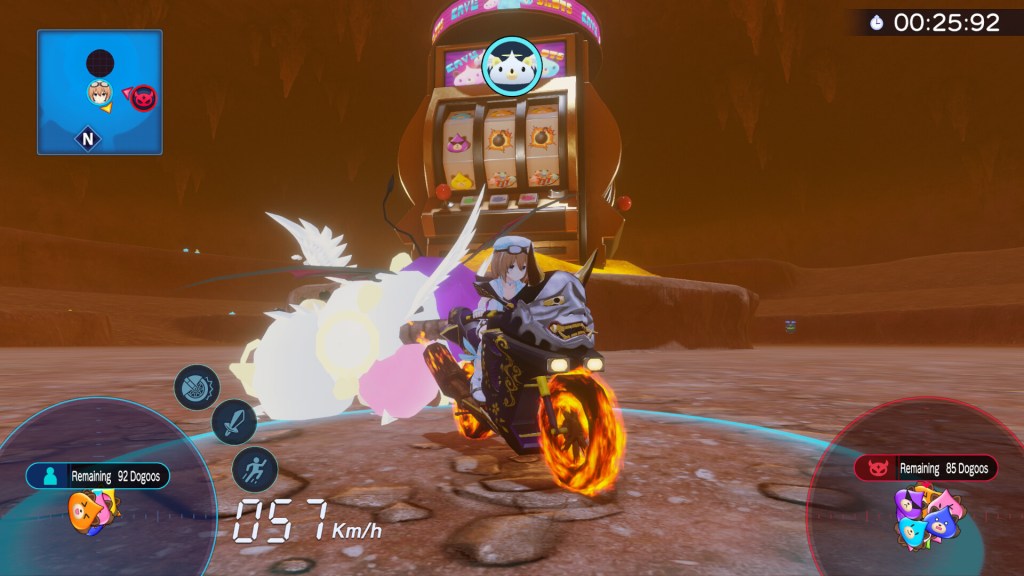
Combat takes place in sprawling, obstacle-laden arenas where the Dogoos spawn in waves. These aren’t your average slimes. They come in various elemental types, sizes, and occasionally in humorous cosplay—like “Dark Souls Dogoo” or “Stealth Camouflage Dogoo.” The game uses a combo system reminiscent of Dynasty Warriors but enhanced by vehicular momentum. You can drift, boost, and even ramp off terrain to launch aerial combos mid-bike. The results are gloriously messy: one moment you’re uppercutting a slime into orbit, the next you’re grinding along a pipe while laying down a trail of fire.
Racing elements are seamlessly woven in. While the game isn’t a racer in the traditional sense, certain missions involve time trials, checkpoint chases, or boss fights that double as high-speed duels. One standout level has you tearing through a collapsing Dogoo hive while a slime kaiju barrels after you—think Resident Evil 3 meets F-Zero with a coat of rainbow paint. It’s this ability to constantly recontextualize its mechanics that keeps Riders VS Dogoos feeling fresh longer than expected.
Progression is handled via a mission grid, similar to Monster Hunter’s quest board. Completing missions earns you parts, skins, and skill chips which can be used to modify both your Rider and their bike. Customization is surprisingly deep—allowing you to create builds that favor speed, damage output, crowd control, or utility support. There’s even a “Fan Meter” that increases with flashy combos and rewards players with unique cutscenes and bonuses.
The only real downside to the gameplay loop is repetition. While the developers put in effort to vary objectives, the core loop remains: spawn in, beat Dogoos, win. Later levels introduce environmental hazards, shielded enemies, and scripted events to shake things up, but the game occasionally falls into the trap of quantity over quality—especially during multi-phase missions that drag on longer than necessary.
Still, the gameplay is responsive, the variety is solid, and the absurdity keeps things from ever feeling too stale.
Visuals & Style
Neptunia Riders VS Dogoos proudly embraces its over-the-top aesthetic. The visuals are a kaleidoscope of saturated colors, anime-style cut-ins, explosive visual effects, and outrageously detailed character designs. It’s campy. It’s chaotic. It’s kind of beautiful in its own way.
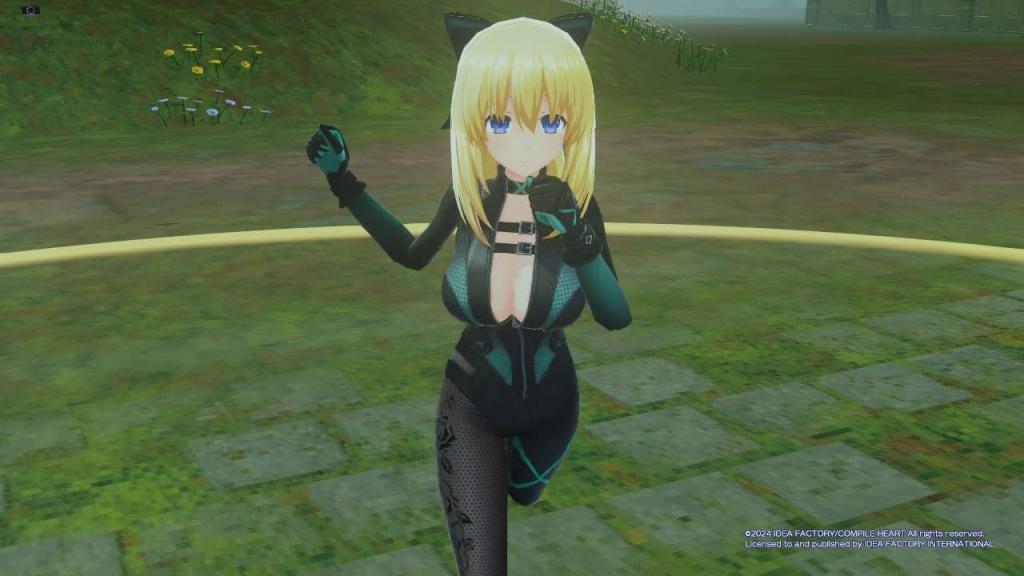
Character models are among the best the series has ever featured. Every Rider is gorgeously rendered, complete with expressive facial animations and customized riding outfits that can be unlocked or purchased (of course) via DLC. Bikes are similarly well-designed, ranging from futuristic hovercrafts to gothic choppers, often sporting impractical but cool-looking attachments like rotating saw blades or laser turrets.

Environmental variety is impressive, especially for a spinoff. You’ll fight through neon-lit cyber-cities, slime-infested forests, collapsing rainbow freeways, and bizarre “2D-mode” throwback levels that parody retro platformers. Each arena is filled with little visual jokes and parodies—like Dogoo billboards, fake loading screens, and even a fake “error screen” boss level.
The game runs at a steady 60 FPS on PlayStation 5 and PC, with occasional drops during heavy particle effects. The Switch version fares reasonably well, though sacrifices had to be made in texture quality and load times. That said, the stylized art direction helps disguise some of the technical limitations.
Fanservice is present and unapologetic—outfits, poses, transformation sequences—yet it rarely overtakes the tone of the game. It’s cheeky, not lecherous, and more about parodying the genre than indulging in it. That balance, once again, is a hallmark of the Neptunia series at its best.
Soundtrack & Voice Acting
Musically, the game delivers exactly what fans expect: energetic, high-octane tracks that mix J-pop, chiptune, EDM, and battle anthems into a chaotic sonic soup. Each level has a distinct theme that often plays off the visual tone—a hard techno track accompanies the cyberpunk zones, while playful ska-pop fills the more whimsical areas. The title screen theme, “Riders of Nep-Nep,” is already a fan favorite and a certified banger.
The soundtrack adapts dynamically during missions, escalating intensity as enemy waves build or during boss encounters. Some tracks even remix classic Neptunia music in interesting ways, adding a layer of nostalgic flair.
Voice acting is solid across both the Japanese and English dubs. The cast returns in full force, with industry veterans like Melissa Fahn (IF), Erin Fitzgerald (Noire), and Cristina Vee (Compa) bringing their usual energy. The writing gives them plenty to work with—quippy banter, absurd monologues, and fourth-wall breaking sarcasm abound.
Sound effects are bombastic, if occasionally overwhelming. Engine roars, slime splats, combo counters, and audience cheers all compete for your attention. While the chaos matches the tone of the game, you may find yourself turning down the effects volume for clarity’s sake.
Story & Writing
If you’ve ever played a Neptunia title, you’ll know what kind of narrative to expect—and Riders VS Dogoos doubles down on that absurdity. The plot kicks off when a mysterious anomaly pulls several CPU Goddesses into a distorted alternate dimension ruled by slime-based creatures. The only way to escape? Form a motorcycle gang and fight your way out, of course.
The story is told in visual novel-style segments between missions, packed with long dialogue exchanges, comedic timing, and meta-references. Characters comment on gaming tropes, criticize their own side quests, and even question whether the game’s budget can support a proper ending. At one point, Neptune literally tries to skip a boss fight via a debug menu—only to accidentally summon “Glitch Dogoo,” one of the hardest enemies in the game.

Each Rider has their own story route, complete with branching choices that affect both the ending and some mid-game cutscenes. These aren’t massive narrative forks, but they offer enough variation to justify multiple playthroughs. Character-specific missions explore their personalities in fun ways. Noire’s route, for instance, involves taking the gang’s organization “too seriously,” complete with a parody of biker film tropes.
The game’s humor won’t be for everyone—it’s niche, self-referential, and sometimes leans a bit too hard into absurdism. But for those familiar with Neptunia‘s satirical DNA, it’s some of the sharpest writing the series has seen in years.
Fan Appeal & Franchise Context
Riders VS Dogoos is unapologetically a game for fans. From returning characters like Arfoire and Histoire to obscure references to previous spin-offs, there’s a sense that the developers made this game as a love letter to long-time Neptunia devotees.
Easter eggs are everywhere. Items from MegaTagmension, character designs from Neptunia U, and even voice lines nodding to the original PS3 release are included. A hidden “Retro Mode” allows you to switch the UI to mimic the look of Hyperdimension Neptunia Re;Birth1, complete with CRT filters.
That said, the game makes an effort to be accessible. New players may miss some references, but the core gameplay is straightforward and the story is standalone. The glossary entries help catch you up, and the Rider tutorials are well-designed.
The fanservice—both in terms of character content and franchise callbacks—is thick, but it never fully excludes newcomers. If anything, it may inspire them to dive deeper into the Neptunia rabbit hole.
Final Verdict
Neptunia Riders VS Dogoos isn’t a perfect game. It’s repetitive at times. Some missions drag. The camera can be finicky when dealing with larger bosses, and the UI can feel cluttered during intense battles. The performance on Switch is clearly inferior to other platforms. And as always with this series, the humor may alienate those unfamiliar with its tone.
But where it succeeds, it does so with flair, heart, and chaotic joy. The gameplay is surprisingly refined, the customization is deep, the art direction is a visual treat, and the story is packed with charm. It’s a celebration of everything that makes Neptunia weird and wonderful—now at 120 mph on a bike with rocket fists.
This is a game that knows exactly what it is, who it’s for, and makes no apologies. It’s not trying to reinvent the wheel—but it sure as hell strapped that wheel to a bike, gave it a transformation sequence, and rode it into battle against an army of anime slime monsters.
If you’re a longtime Neptunia fan, Riders VS Dogoos is a must-play spinoff that ranks among the best the franchise has to offer. For newcomers, it’s a wild ride that might just charm you into becoming a fan.
 1-Up Games
You must be logged in to post a comment.