
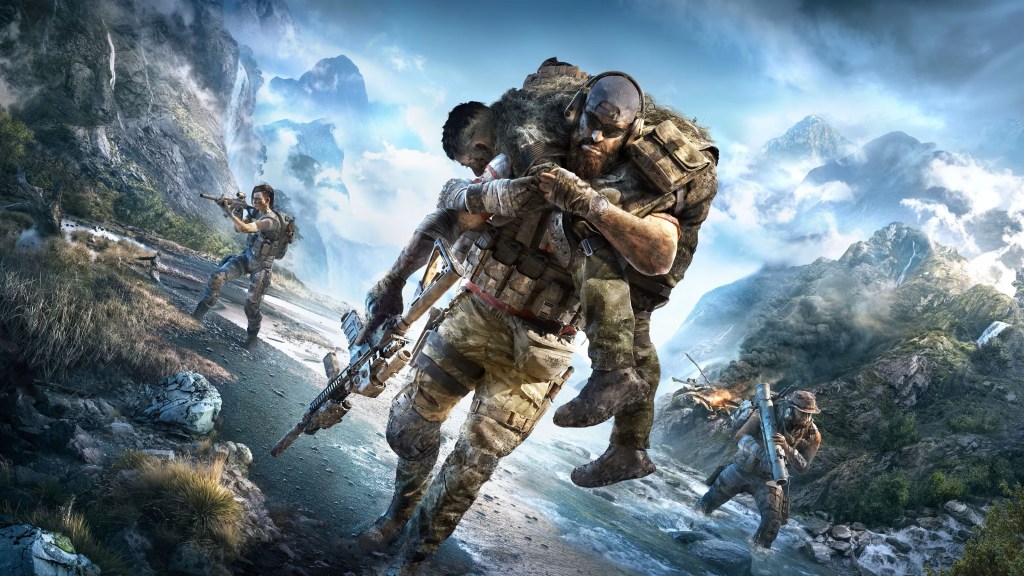
In what could be one of the most significant technical pivots in the franchise’s history, Ubisoft is reportedly preparing to develop the next Ghost Recon title using Unreal Engine 5 stepping away from its long-time reliance on proprietary engines like AnvilNext and Snowdrop. While the move is yet to be officially confirmed by Ubisoft, credible sources and insider commentary have added weight to the speculation, painting a picture of a series on the cusp of dramatic reinvention.
A Tactical Shift: From Anvil and Snowdrop to UE5
Ubisoft has historically leaned on its in-house engines for flagship titles. Ghost Recon Wildlands and Breakpoint were powered by AnvilNext 2.0, while other Ubisoft shooters like The Division ran on Snowdrop. These engines were developed with proprietary workflows in mind, allowing for customization tailored to Ubisoft’s development culture. However, according to a recent episode of the Insider Gaming Weekly Podcast, that tradition may be ending.
Industry insider Tom Henderson claimed the next Ghost Recon is being built in Unreal Engine 5, citing sources close to the project. While Henderson is known for accurate leaks across franchises like Call of Duty and Battlefield, this revelation still raised eyebrows, especially given Ubisoft’s typically tight control over its tech stack.
If true, this represents more than just a swap of tools it suggests a fundamental change in Ubisoft’s approach to how Ghost Recon is built, plays, and evolves.
Why Unreal, and Why Now?
The timing is telling. Unreal Engine 5 has become the go-to platform for numerous studios big and small thanks to its robust suite of next-gen features, particularly Nanite for geometry streaming and Lumen for real-time lighting. These tools dramatically reduce development bottlenecks, enabling studios to prototype and iterate faster.
By moving to UE5, Ubisoft gains:
- Cross-team efficiency: Developers across Ubisoft’s worldwide studios can collaborate more easily with standardized pipelines.
- Improved visual fidelity: Ghost Recon could finally match its grounded, tactical gameplay with an equally grounded and immersive world.
- Better mod and tool support: UE5’s flexibility may allow future community tools or even mod support long requested by fans.
It may also signal a broader internal shift at Ubisoft toward external engines, echoing the studio’s decision to develop the upcoming Star Wars: Outlaws on Snowdrop, but use Unreal Engine 5 for unannounced projects like the rumoured Assassin’s Creed Hexe.
A Return to Tactical Roots?
Leaked design documents and internal discussions suggest that the new Ghost Recon game allegedly codenamed Project Ovr will be a first-person tactical shooter. This is a notable change, diverging from the third-person open-world structure introduced in Wildlands and expanded in Breakpoint.
The reported design philosophy appears closer to games like Ready or Not, Escape from Tarkov, or even the hardcore realism of early Ghost Recon titles. Expect slower pacing, teamwork-focused encounters, and more authentic squad management, where positioning and planning matter far more than reflexes.
The adoption of Unreal Engine 5 supports this direction. With its high dynamic range lighting and fluid physics systems, UE5 is well suited for games that thrive on atmosphere and tension. The shadows of an abandoned warehouse or the glint of a sniper’s scope peeking through fog become more than just aesthetic they become gameplay.
Of course, leaving behind in-house engines also introduces risk. Ubisoft has decades of experience working with Anvil and Snowdrop, complete with internal tools, documentation, and seasoned developers. Shifting to UE5 means retraining staff, adjusting pipelines, and trusting external tech.
Moreover, while UE5 boasts undeniable strengths, some early adopters have experienced performance issues, especially on older hardware. Ubisoft will need to tread carefully to ensure that performance is not sacrificed for fidelity, especially if the title aims to launch on both current-gen and cloud platforms.
What This Means for the Franchise
If these reports hold true, Ghost Recon could be poised for a genuine rebirth. The franchise has struggled to find a consistent identity in recent years, with Breakpoint in particular criticized for its uneven tone, live-service focus, and lack of the tactical edge fans expected.
Unreal Engine 5, coupled with a first-person tactical gameplay loop, could be exactly what the franchise needs. It brings the opportunity to build immersive, detail-rich environments that support slow, methodical play. It could also attract a new audience players who love the precision and planning of ARMA, Insurgency: Sandstorm, or Squad but want it wrapped in a more cinematic, narrative-driven package.
Ubisoft may also find commercial success by riding the wave of tactical shooters growing in popularity in both the mainstream and indie spaces.
The Road Ahead
While Ubisoft hasn’t officially confirmed any of these developments, momentum is clearly building. With the game reportedly entering alpha testing by late 2025, a reveal in early 2026 wouldn’t be surprising. Fans hoping for a return to Ghost Recon’s roots should be cautiously optimistic. Between the shift in engine, gameplay style, and visual direction, there’s a real chance this next chapter delivers the grounded, squad-based experience the brand was once known for.
And in the end, whether it’s built in Anvil, Snowdrop, or Unreal what matters most is whether Ubisoft listens to its players and builds a Ghost Recon that finally feels like Ghost Recon again.


 1-Up Games