
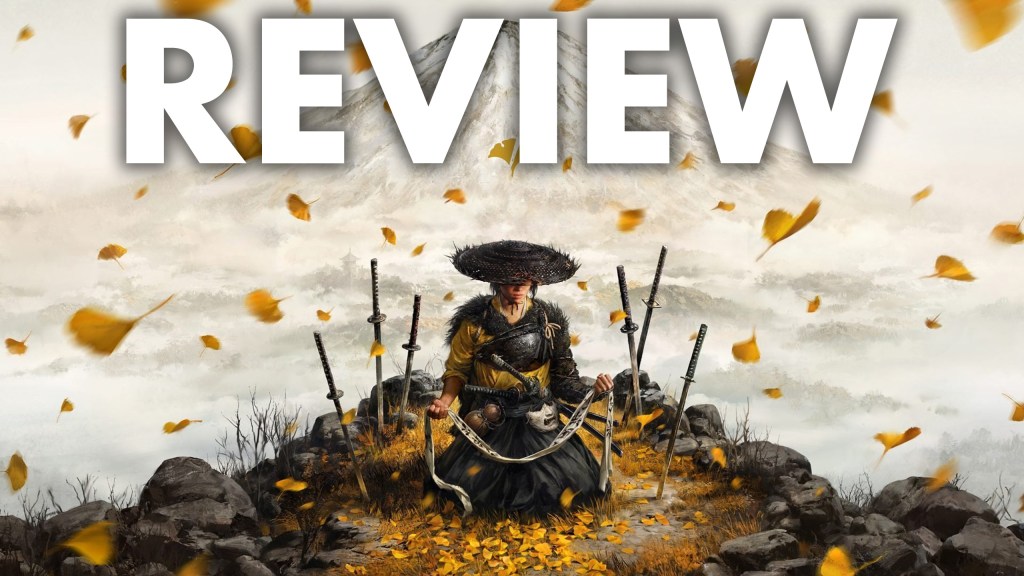
Ghost of yotei had a big job, it had to live up to one of my favorite games of all time and I’m happy to say it got really close. When I first played Ghost of Tsushima all those years ago it spoke to me on a level most games don’t or can’t it was actually one of the first games, I ever reviewed on my old you tube channel.
So, when Sucker punch announced the sequel and Jin wasn’t front and centre it was a bit worrying but all of that was put to rest the second I loaded up the game, the opening moments of Ghost of Yōtei left me utterly captivated. Not for just a few seconds but in a way that convinced me this game is going to be something special. I want to walk through why the opening is so amazing it instantly sells the tone, setting and stakes.
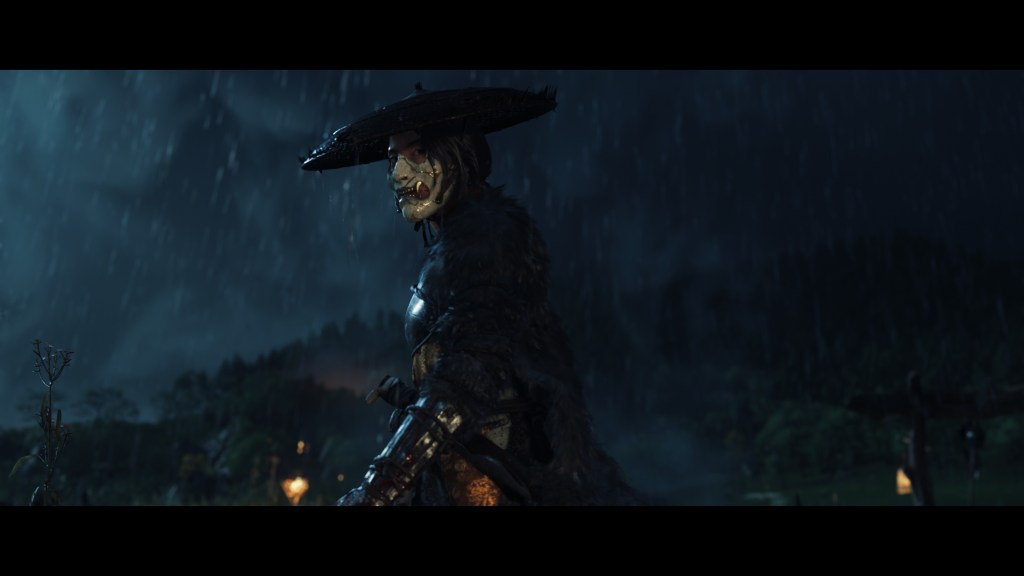
We meet Atsu a lone mercenary shaped by tragedy. The opening shows that sixteen years ago her family was slaughtered by the so-called “Yōtei Six” and now she returns, scarred, hardened, looking for vengeance.
What hits me is how the scene manages to evoke both anger and loss. It doesn’t feel flat or cliché: you sense the weight of the past, the burden she carries, and yet you also feel her resolve. The opening moment gives you a reason to care not just “kill the bad guys” but “see what this wound has made her become”.

Lots of games open with big set-pieces, flashy trailers, massive reveals but Ghost of Yōtei’s opening felt quiet in comparison. Not silent but deliberately measured. Rain Falls The wind sighs. A broken ginkgo tree, charred and old, hints at a massacre in the past. The world shows it; you don’t need a voiceover telling you everything.
That subtlety is freeing. It allows you to step in, breathe, observe and then act. It gives agency. And that’s what earned it that “wow” moment for me: I felt like I entered a story in progress rather than just being dropped into a mission.

While the story in Ghost of Yōtei remains a cornerstone of the experience, it’s really just one piece of a much larger whole. Exploring and battling your way across Ezo is consistently engaging not because the game reinvents what Ghost of Tsushima already perfected, but because it thoughtfully refines and expands on those ideas in meaningful, often understated ways.
The guiding wind makes a welcome return, once again serving as an elegant solution to navigation that keeps you focused on the landscape instead of menus or HUD clutter. It’s a small detail that massively boosts immersion, especially in a world this stunningly realized. The return of animal guides birds, foxes, and others remains a delightful touch, constantly tempting you off the beaten path toward side activities that actually feel rewarding.

Combat, though instantly recognizable to anyone familiar with Jin Sakai’s journey, has been honed to near perfection. Every encounter feels like a dance fluid, reactive, and tactical with fast weapon swapping that keeps you adapting on the fly. The stealth systems also carry forward that same balance between accessibility and creativity, introducing new gadgets and techniques that make silent approaches more dynamic and satisfying than ever.

If there’s one area where Ghost of Yōtei truly shines, it’s in its pacing. The game strikes a rare balance its main story is gripping, yet the side content constantly pulls you in without ever feeling like a distraction. Each optional mission feels meaningful, delivering self-contained tales that add texture to the world and naturally push Atsu’s evolution as an onryō. Rather than avoiding the main quest, I often found myself happily drifting from it, caught up in the lives and stories scattered across Ezo.
What helps this flow so beautifully is the near-instant fast travel. It feels almost unreal how quickly you can jump between distant regions, upgrade your gear, or cash in contracts. There’s virtually no downtime; the world keeps you in motion, making hours melt away in what feels like minutes. Still, for players who prefer a more grounded approach, the game includes clever systems that let Atsu summon merchants and craftsmen to her camps. It’s a subtle but thoughtful nod to immersion and player choice.

While Yōtei doesn’t overhaul the foundation laid by Ghost of Tsushima, it doesn’t need to. Sucker Punch got the fundamentals right the first time. What stands out most here is how the sequel elevates its storytelling and character work. Atsu, in particular, is an incredible lead fierce, flawed, and human portrayed perfectly by Erika Ishii. Honestly, she kills this role. She carries herself with a volatile mix of grief and determination, often masking pain with sharp humor and too much sake. Watching her grow, stumble, and strengthen through her journey and seeing how those around her respond makes every moment feel alive. And the fact that all this unfolds seamlessly, without intrusive loading screens, keeps the immersion unbroken from start to finish.
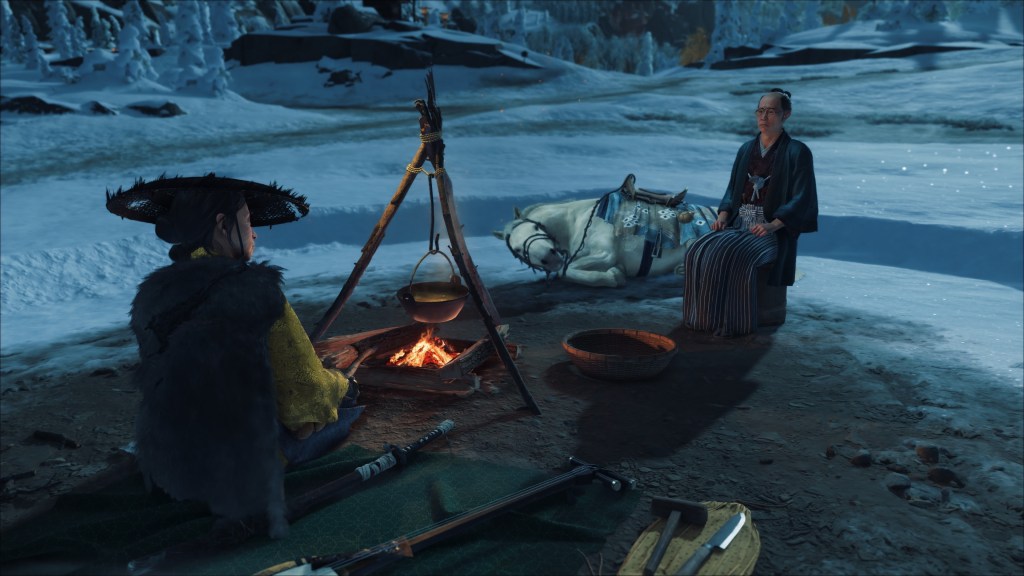
This game is amazing it had me griped right to the very end just like the first game did now I still feel like the first game hold a place in my heart that places it just a little above this entry in my mind I cannot deny that sucker punch has once again knocked it out of the park I haven’t really worked out a scoring system yet that will be the next thing on my to do list but my god if this game isn’t a 10/10 I don’t know what is.
Ghost of Yōtei | Review
10 – Masterpiece
More info on our ten-point review scale can be found here but for a score of Ten:
This video game was a genre-defining achievement. Exceptional in nearly every way, with groundbreaking design, unforgettable moments, and flawless execution. Any flaws are negligible compared to its overwhelming strengths. A game that will be remembered for years and console generations to come.
Review Summary
Ghost of Yōtei doesn’t try to replace Ghost of Tsushima. It refines it. Through quiet storytelling, refined combat, and Atsu’s powerful journey, Sucker Punch delivers a sequel that proves restraint can be just as impactful as spectacle.
Pros
- Atsu is a compelling new protagonist
- Atmospheric storytelling
- Seamless immersion
- Beautifully realized world
- Excellent pacing
- Improved stealth systems
Cons
- Doesn’t radically reinvent the formula
- Still lives slightly in Tsushima’s shadow
Video Review
For more 1-Up Games reviews, check out our review page, here.

 1-Up Games
Please feel welcome to leave a comment