
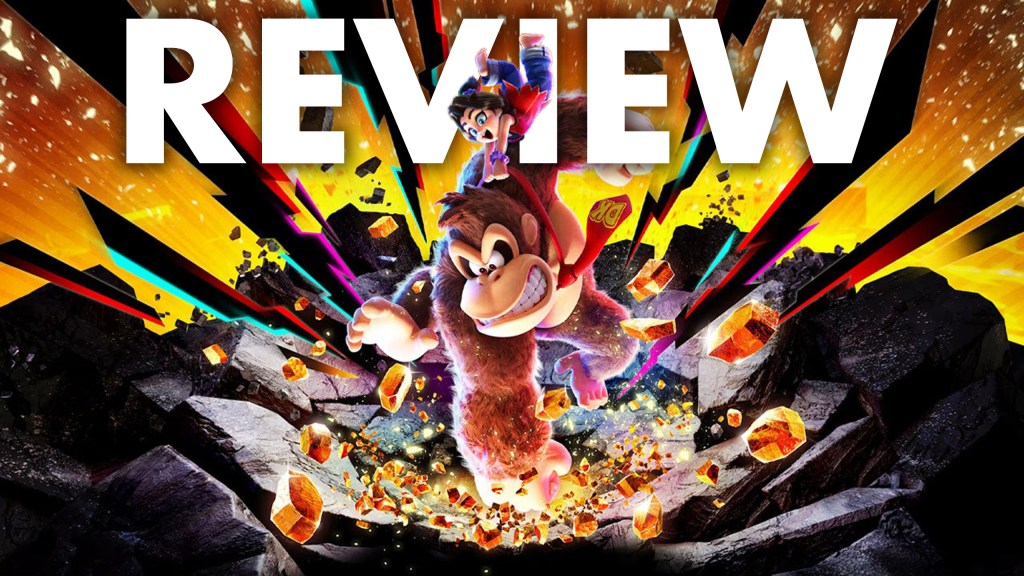
Donkey Kong’s return has been a long time coming, and Bananza makes it immediately clear that this isn’t just another nostalgic revival. Instead of tight, linear stages, DK is dropped into massive, fully destructible spaces that encourage curiosity, experimentation, and pure chaos. The closest comparison is Super Mario Odyssey, but where Mario dances around obstacles, Donkey Kong simply smashes through them. That shift in philosophy results in an adventure that feels endlessly playful, deeply satisfying, and dangerously easy to lose hours to.
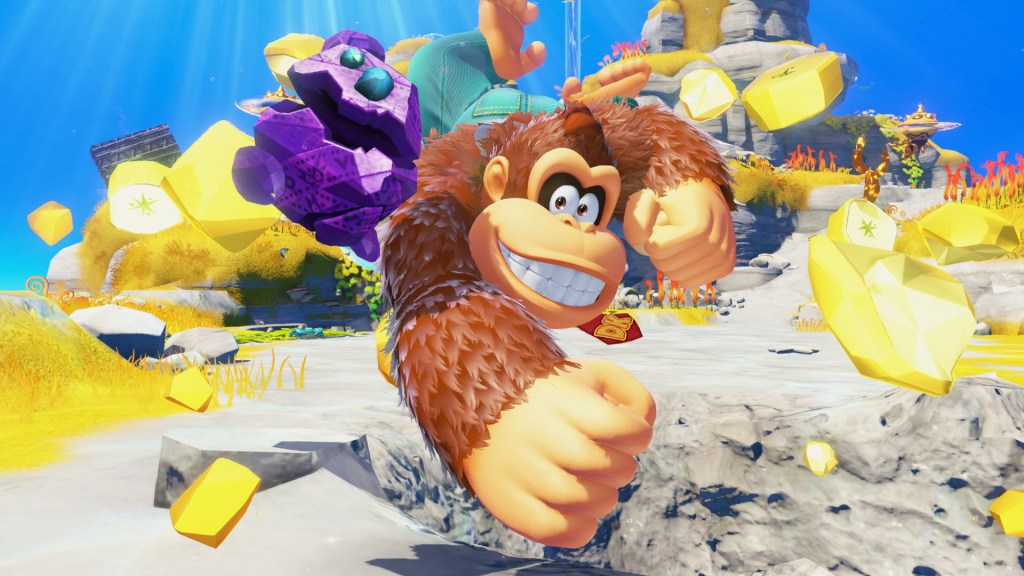
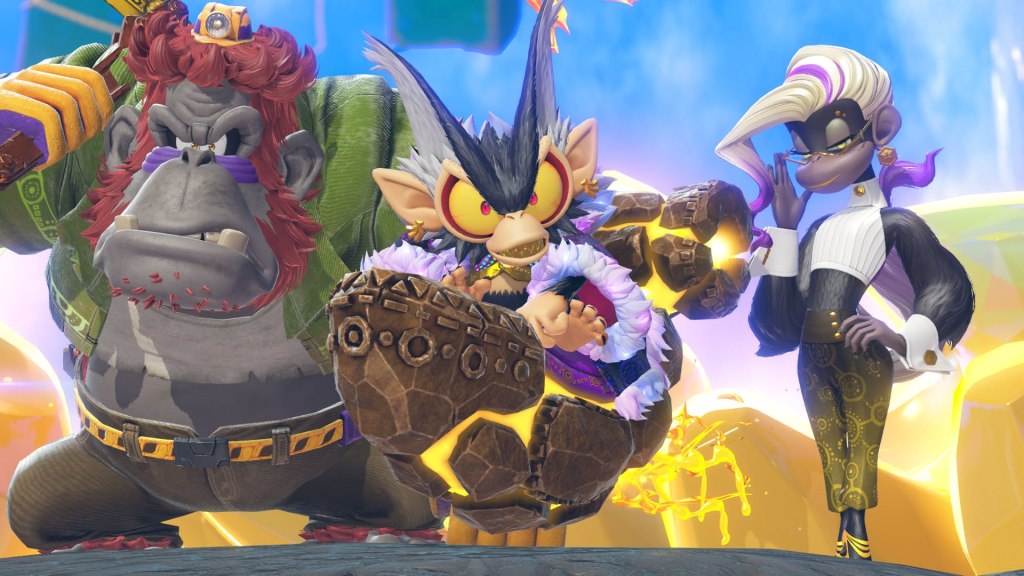
The game opens with DK living a surprisingly mundane life, working as a miner and stuffing his face with valuable Banandium Gems. That routine doesn’t last long. A catastrophic impact disrupts the operation, setting DK on a downward journey into the planet’s depths to chase a gang of greedy apes determined to hoard every gem for themselves. Along the way, he’s joined by a younger version of Pauline, whose singing abilities play a key role both mechanically and narratively.
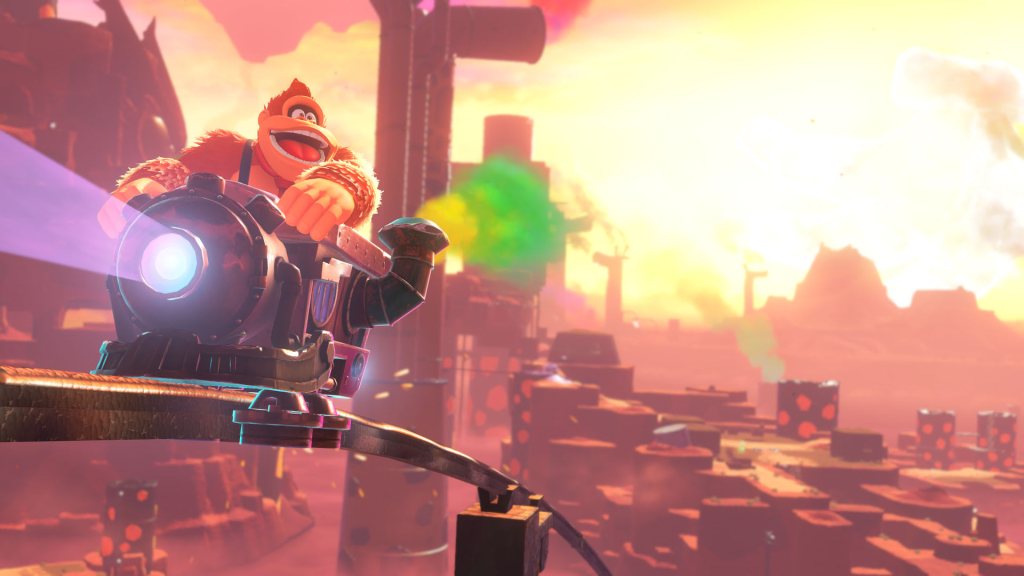
The setup is simple, silly, and completely appropriate for a Donkey Kong game. While neither DK nor Pauline are particularly complex characters Pauline does technically have an arc, but she mostly plays the role of supportive companion the story doesn’t overreach. It doesn’t need to. This is a world fueled by bananas, slapstick logic, and visual charm, and the bizarre underground societies you encounter along the way add enough personality to keep things engaging.
At its core, Donkey Kong Bananza borrows heavily from Odyssey’s structure. Each region is a wide-open playground filled with Banandium Gems to uncover. You’re never forced to collect a specific number to advance the story, but gems feed into upgrades, so exploration is always encouraged. Some are tied to challenges or narrative moments, while others are hidden in the terrain itself buried underground, embedded in cliffs, or teasingly visible from afar.

What sets Bananza apart is how you move through these spaces. DK isn’t built for finesse; he’s built for destruction. Nearly everything in the environment can be punched, ripped apart, climbed, or reshaped. You can carve tunnels through rock, scale sheer walls, or hurl chunks of terrain to create your own paths. Simply choosing a direction and smashing forward feels liberating in a way few games manage to pull off. Traversal alone is fun here, which is no small feat.
That freedom could have become repetitive, but the sheer volume of collectibles prevents the momentum from ever slowing. Beyond Banandium Gems, you’ll find chips used to purchase more gems, fossils that unlock cosmetic outfits with gameplay perks, and piles of gold for consumables. You’ll almost certainly end up with more currency than you need, yet the constant reward loop makes it hard to ignore just one more hidden corner. Like Breath of the Wild or Odyssey, curiosity is continually rewarded, pulling you deeper into each environment.
Variety also plays a key role in keeping things fresh. Every new area introduces unique mechanics or environmental quirks, and scattered challenge rooms offer bite-sized tests focused on combat, platforming, or puzzle-solving. The game is undeniably on the easier side combat in particular is straightforward but it never feels mindless. Collecting five gems grants a skill point, allowing you to upgrade DK’s abilities. These upgrades are mostly incremental, but they add just enough progression to make exploration feel purposeful.
One of Bananza’s standout mechanics is its transformation system. When Pauline sings, DK can temporarily enter a “Bananza” state, transforming into powerful animal forms. The initial Kong Bananza allows him to demolish otherwise indestructible materials, while later forms offer different traversal or combat advantages. Importantly, these transformations are balanced well enough that they enhance the experience without breaking it. They’re fun to activate and often open up clever new routes through the world.
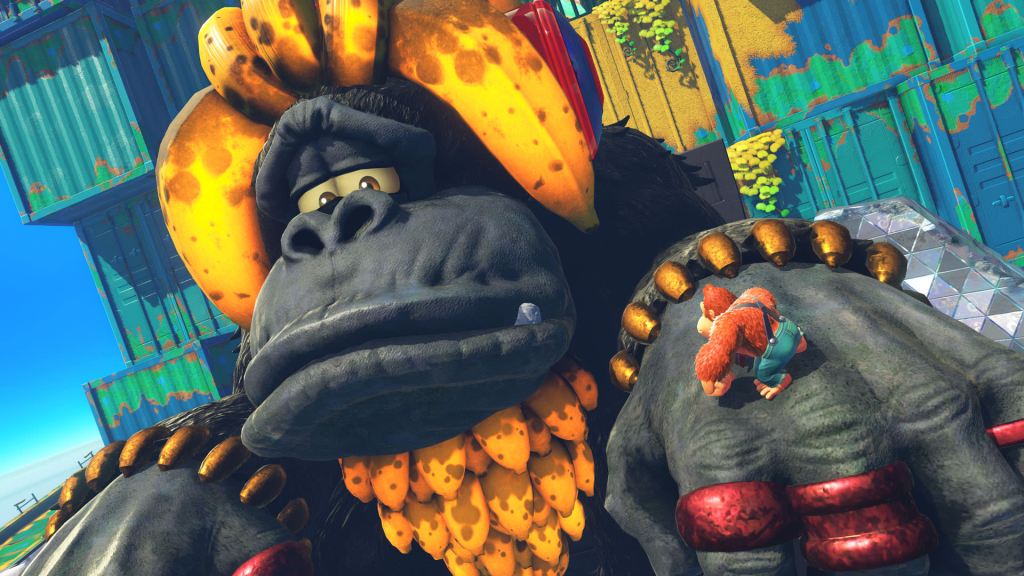
Because progression is largely self-directed, pacing feels entirely natural. You can obsessively clear each level or breeze through and move on it’s your call. Fully completing the game, including post-game content, can take roughly 20 hours, but it rarely feels like a grind. There’s also a local co-op mode where a second player controls Pauline in a support role, making it a great option for playing alongside a younger or more casual partner. An additional artist mode lets players sculpt terrain freely, offering a surprisingly challenging and creative diversion from the main adventure.
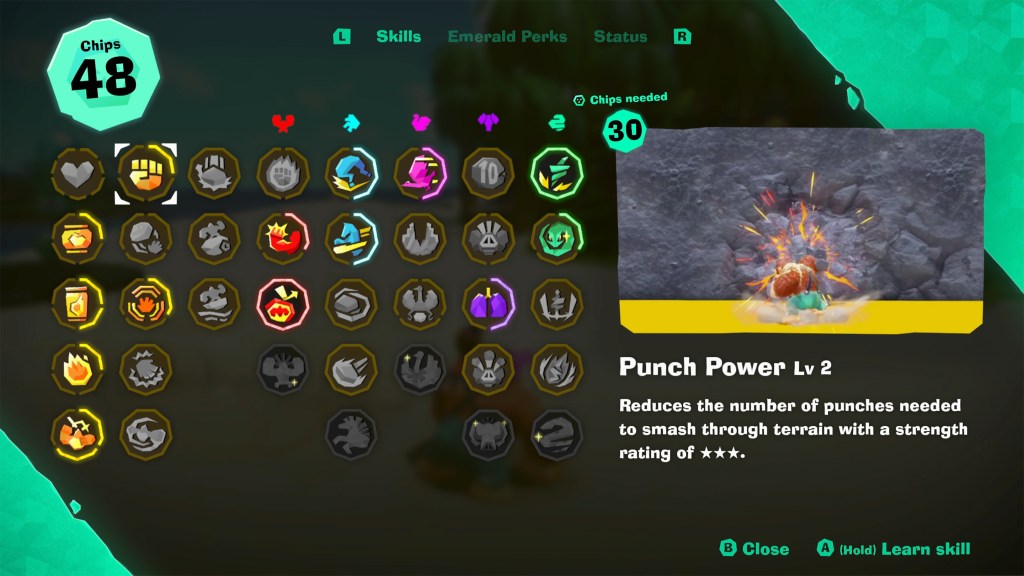
From a visual standpoint, Donkey Kong Bananza is impressive, especially considering how much of the world can be destroyed in real time. DK’s exaggerated, cartoon-heavy redesign makes him far more expressive, and the environments burst with colour and detail. While there are occasional frame drops and some noticeable pop-in during especially chaotic moments, they rarely detract from the experience. The soundtrack is equally enjoyable, weaving in familiar Donkey Kong themes while maintaining its own identity, though it sometimes fades into the background amid the on-screen mayhem.
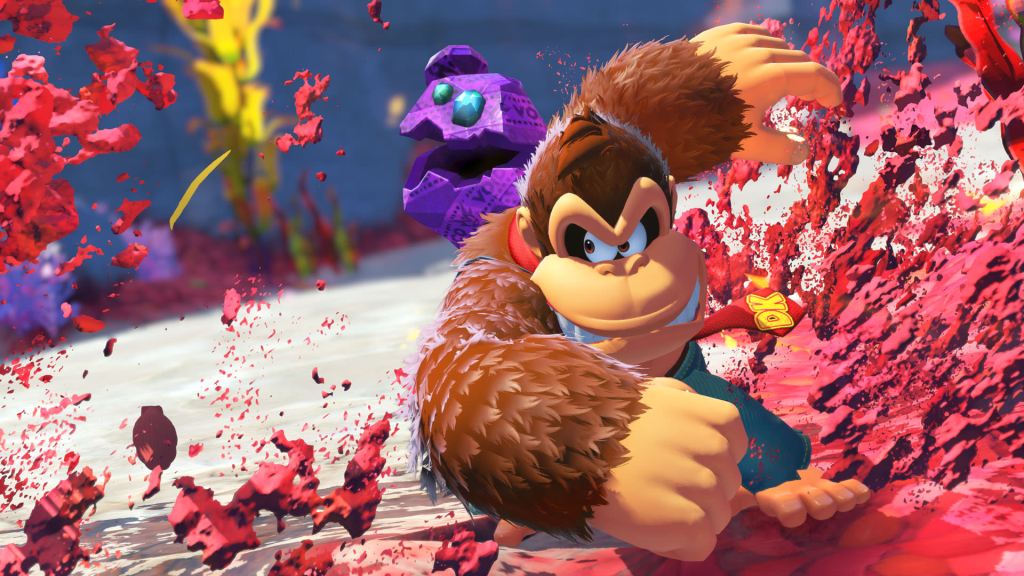
Ultimately, Donkey Kong Bananza is an outstanding reinvention of the franchise. By adapting the open-ended brilliance of Super Mario Odyssey to a character built around brute force and momentum, Nintendo has crafted something that feels both familiar and refreshingly new. Smashing through terrain in search of Banandium Gems remains consistently fun, and the game never bogs itself down with unnecessary complexity. For Switch 2 owners, this is an adventure well worth digging into.
Donkey Kong Bananza | Review
9 – Outstanding
More info on our ten-point review scale can be found here but for a score of Nine:
This video game was a top tier experience in its genre, minor issues may exist but one of the best games of its kind and easy to recommend to anyone.
Review Summary
Donkey Kong Bananza takes the open-ended brilliance of Super Mario Odyssey and rebuilds it around pure, unapologetic destruction. With massive, breakable environments, endlessly rewarding exploration, and a movement system that makes smashing through the world feel irresistible, Bananza is a joyful, addictive adventure that proves Donkey Kong still knows how to go bananas.
Pros
- Highly destructible environments
- Strong sense of freedom
- Bananza transformations
- Catchy soundtrack
- Bright, expressive visuals
- Natural pacing
- Local co-op and extra modes
Cons
- Combat is very basic
- Overall difficulty is on the easy side
- Some upgrades feel minor
- Sound mixing can bury the music
Video Review
For more 1-Up Games reviews, check out our review page, here.



 1-Up Games
You must be logged in to post a comment.