
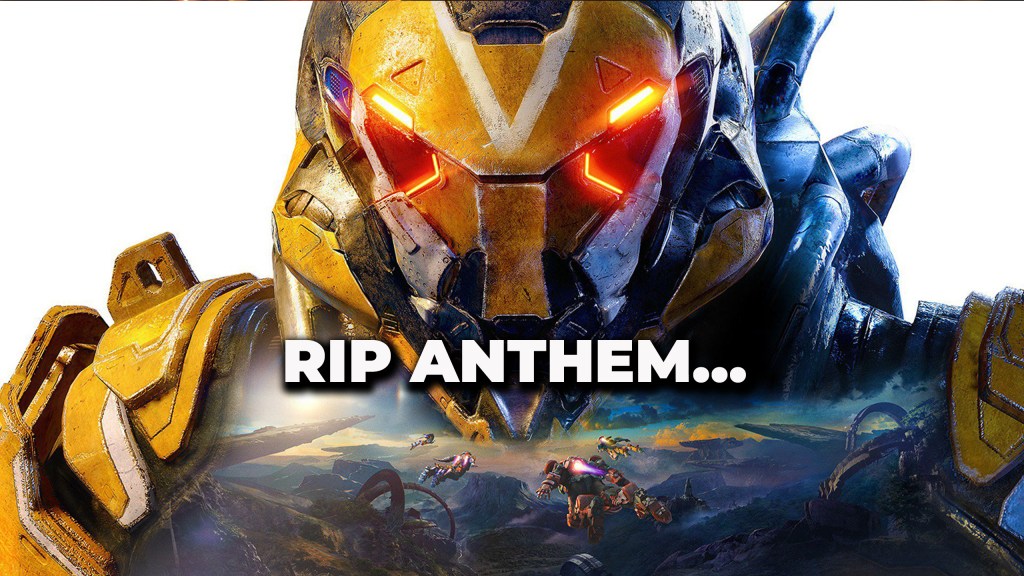
If you’ve spent any amount of time on YouTube lately, there’s a good chance Anthem has unexpectedly reappeared in your recommendations. Not in the form of patch notes or comeback trailers, but retrospectives, “what went wrong” essays, and players reinstalling it for one last look. That sudden resurgence isn’t random. It’s happening because BioWare has confirmed that Anthem’s servers will be permanently shut down on January 12, 2026. Once that date arrives, the game will be completely unplayable. No offline mode. No preservation option. Anthem will truly cease to exist.
Compounding that news is the quieter detail that Anthem was also removed from EA Play in August 2025. For anyone who has tried launching the game through Game Pass, you already know how tightly it’s tied to EA Play’s backend.
What surprised me most wasn’t the shutdown itself, but the reaction to it. Instead of relief or indifference, a lot of people responded with genuine disappointment. Comment sections filled with familiar phrases: “It had potential.” “They gave up too soon.” “This could have been something special.” That response felt wildly disconnected from how Anthem was discussed at launch, when the prevailing narrative was that it was broken beyond repair.
So I decided to revisit it properly. No nostalgia-fueled memory. No selective recall. I spent many hours playing Anthem again at the end 2025 and the start of 2026 to answer a simple question: were we too harsh, or was the criticism justified?
A Start That Makes You Doubt Yourself
The first few hours of Anthem are dangerous not because they’re bad, but because they’re convincing. Booting the game up today, it’s easy to feel a creeping sense of doubt about the way Anthem was written off. Almost immediately, the game reminds you of its strongest achievement: movement.
Flying still feels incredible. It’s smooth, responsive, and thoughtfully designed. The overheat system encourages intentional traversal, forcing you to skim water, dip through rain, or plan your routes carefully. It gives the act of flying texture rather than turning it into a mindless boost button. Even years later, few games have captured this fantasy as cleanly as Anthem did.
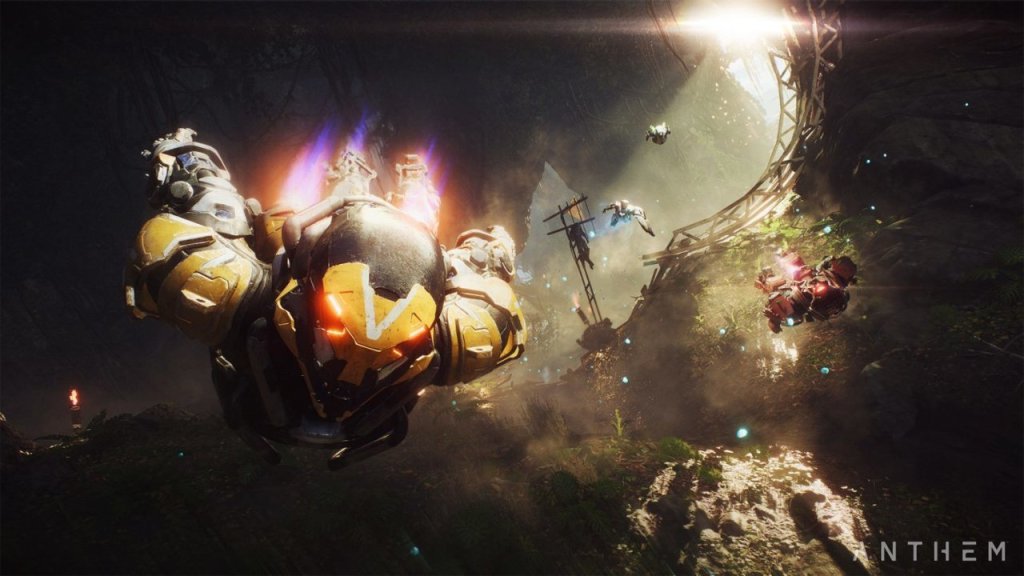
Combat initially reinforces that impression. Abilities hit hard, ultimate’s look spectacular, and the elemental combo system delivers instant audio-visual payoff. Watching enemies detonate in a chain reaction still feels satisfying. There’s a clear power fantasy here, and for a moment, it’s easy to believe Anthem deserved more time.
Even the presentation holds up better than expected. Facial animations during cutscenes are expressive, character models are detailed, and voice acting is often strong. For a live-service shooter, Anthem clearly invested in cinematic storytelling. Fort Tarsis feels lived in, and several NPCs come across as believable people rather than quest dispensers.
In those opening hours, Anthem makes a persuasive argument for itself.
Javelins: The Heart of Anthem
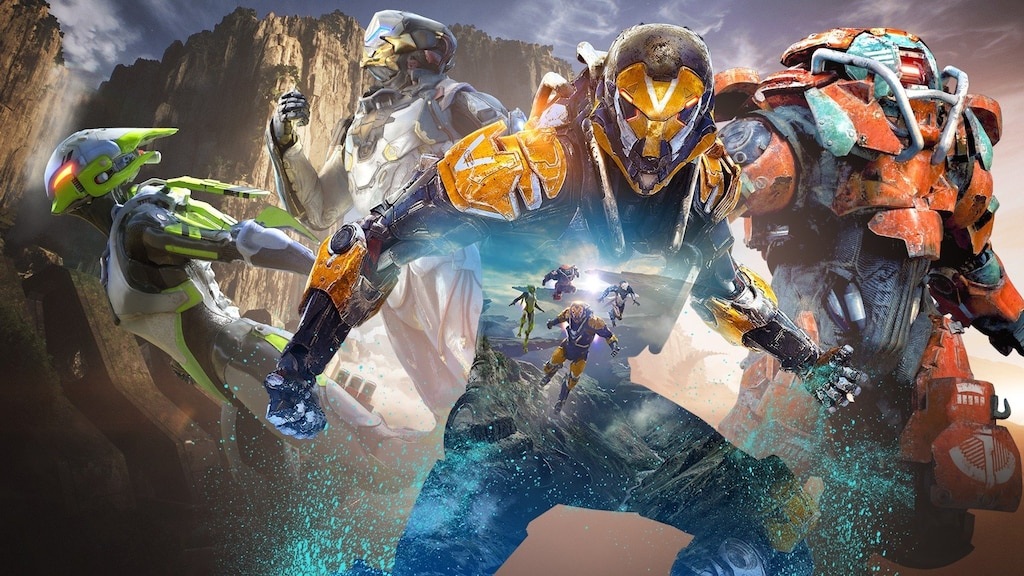
Anthem’s identity lives and dies with its Javelins, and to this day, they remain its greatest success. Each suit feels mechanically and visually distinct. Storm’s elemental dominance, Colossus’ brute force, Ranger’s adaptability they all communicate clear roles and fantasies.
Customization, particularly through paint options, is excellent. Players’ Javelins feel personal. Even years later, stepping into a shared space reveals wildly different color schemes and aesthetics. Everyone looks like they’re piloting their version of a suit, not a template.
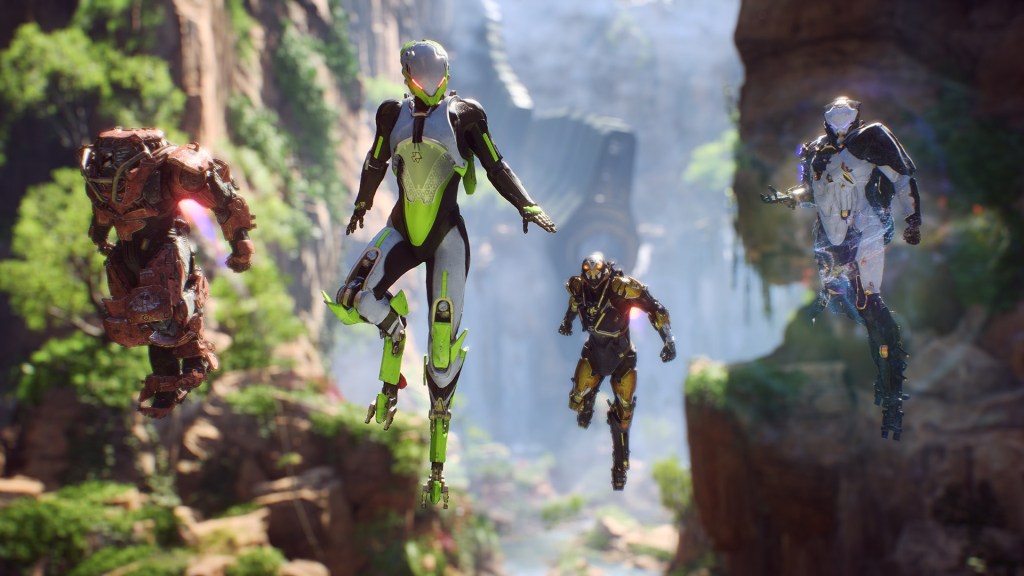
The problem isn’t that Anthem lacks personality it’s that the systems around those Javelins fail to support them.
Where Anthem Actually Clicks
It takes a while, but Anthem eventually reveals the kind of content it was always meant to deliver. Strongholds the game’s strike-style missions are where everything finally aligns. Enemy density improves. Encounters demand ability management. Environments are structured rather than decorative.
With a group, these missions feel focused and engaging. They’re not revolutionary, but they’re enjoyable and replayable. For brief moments, Anthem stops feeling like a collection of disconnected ideas and starts feeling like a cohesive game.
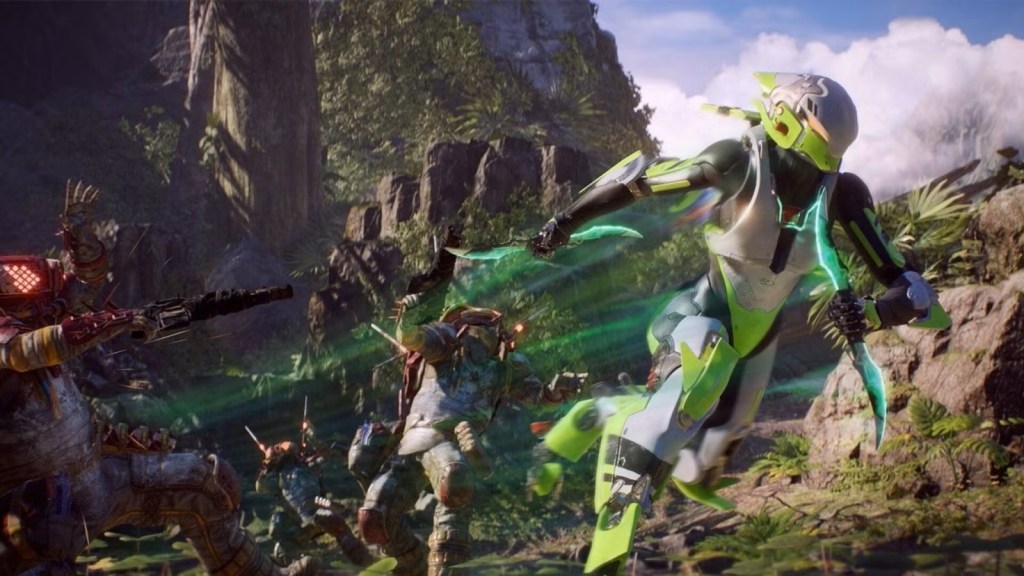
Unfortunately, reaching that point requires pushing through everything else.
The Campaign Problem
Anthem’s campaign isn’t doomed by its narrative; it’s undone by its pacing. Progression is constantly interrupted by unnecessary friction. Missions shuttle you back and forth between Fort Tarsis and the open world, often for minimal payoff. Conversations are locked to slow, first-person walking segments. Menus trigger load screens. Load screens lead to more load screens.
There’s an exhausting amount of downtime where you simply aren’t playing Anthem.
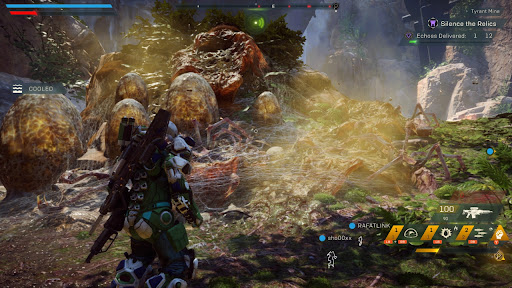
The open world itself, while visually impressive, feels hollow. Objectives are repetitive and rarely engaging. You’re often flying from marker to marker, completing mundane tasks before being pulled back into dialogue-heavy segments that halt momentum entirely.
Ironically, this makes Anthem’s refusal to reuse its best content stand out even more. The strongholds are engaging, yet the campaign avoids them in favour of less interesting activities. It’s hard not to see why other loot shooters repurpose their strongest content Anthem’s alternative simply doesn’t work.
Even after post-launch changes removed some of the worst progression blockers, the campaign remains a slog. By the twelve-hour mark, I didn’t stop playing because the game was difficult. I stopped because I was tired of fighting its structure.
Loot Without Excitement
For a loot shooter, Anthem’s loot is its most damaging flaw. Weapons fall into narrow archetypes with little variation. Drops rarely inspire curiosity. Build experimentation feels shallow, and meaningful upgrades are scarce during the campaign.
Even inspecting loot feels awkward, as pickups can’t be properly examined until after missions conclude. That delay robs loot of immediacy and excitement. Armor, the most visually expressive part of the game, is largely disconnected from gameplay rewards.

The combo system carries combat for a while, but it can’t carry the entire experience. Once you find an effective setup, there’s little incentive to change. Enemy behavior doesn’t evolve enough to demand adaptation, and solo play exposes how dependent the systems are on coordinated teams.
Anthem never establishes a satisfying progression loop the very thing a live-service game needs to survive.
A Launch That Never Let Go
Even now, Anthem still shows remnants of its troubled release. Bugs persist. Progression occasionally misfires. These issues are smaller today, but they hint at how much technical debt the game carried early on.
At launch, that debt consumed everything. Stability problems overshadowed discussion. Developer resources were spent fixing fundamentals instead of building momentum. By the time Anthem reached a playable state, the audience had already moved on.
Was Anthem Worth Saving?
Yes but only with significant changes.
Anthem had a strong foundation: excellent movement, satisfying combat feel, striking visuals, and distinct class identities. What it lacked was cohesion, depth, and a compelling loot economy. With a reworked progression system and a stronger focus on its best content, it could have carved out a lasting space.
Instead, Anthem became a reminder that nailing the hardest parts of game design isn’t enough if the connective tissue fails.
When the servers shut down, Anthem won’t be remembered solely as a failure. It will be remembered as a glimpse of something better a game that almost found its footing, but never quite learned how to stand.
And that, more than anything, is why its ending still hurts.

 1-Up Games
Please feel welcome to leave a comment